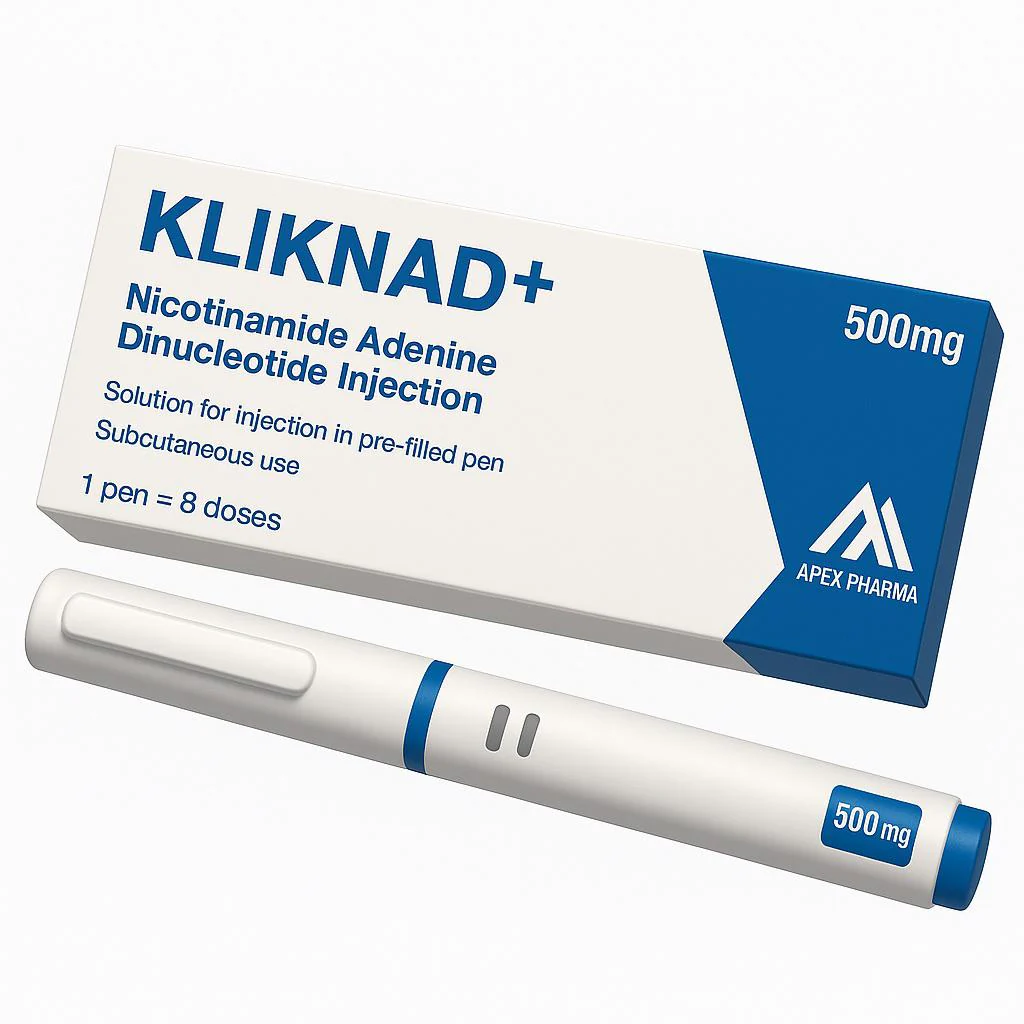
NAD⁺ 500 mg pen
Nicotinamide adenine dinucleotide (NAD⁺) is a vital coenzyme involved in cellular metabolism, DNA repair, and mitochondrial function. In rat models, NAD⁺ supplementation has been extensively studied, revealing its potential in mitigating various pathological conditions.One significant area of research focuses on NAD⁺’s neuroprotective effects. In a study examining chronic cerebral hypoperfusion in rats, NAD⁺ administration improved cognitive function and reduced neuroinflammation by enhancing mitochondrial function and decreasing reactive oxygen species production. This suggests NAD⁺’s potential in treating neurodegenerative diseases.
Furthermore, NAD⁺ has been implicated in enhancing exercise endurance. A study demonstrated that treatment with NAD⁺ and honokiol improved exercise capacity in rats by restoring SIRT3 levels in skeletal muscles and enhancing mitochondrial complex I levels.
Safety assessments of NAD⁺ precursors like nicotinamide riboside (NR) have also been conducted. A 90-day oral toxicity study in Sprague-Dawley rats found no adverse effects at doses up to 1,200 mg/kg/day, supporting the safe use of NR in long-term studies.
Additionally, NAD⁺ supplementation has been shown to protect against spinal cord ischemia-reperfusion injury in rats by reducing oxidative stress-induced neuronal apoptosis, highlighting its potential in treating spinal cord injuries.
These findings underscore the therapeutic potential of NAD⁺ in various disease models. However, further research is necessary to fully elucidate its mechanisms and translate these benefits into clinical applications.
Product Information
Product Information
Shipping & Returns
Shipping & Returns
Description
Nicotinamide adenine dinucleotide (NAD⁺) is a vital coenzyme involved in cellular metabolism, DNA repair, and mitochondrial function. In rat models, NAD⁺ supplementation has been extensively studied, revealing its potential in mitigating various pathological conditions.One significant area of research focuses on NAD⁺’s neuroprotective effects. In a study examining chronic cerebral hypoperfusion in rats, NAD⁺ administration improved cognitive function and reduced neuroinflammation by enhancing mitochondrial function and decreasing reactive oxygen species production. This suggests NAD⁺’s potential in treating neurodegenerative diseases.
Furthermore, NAD⁺ has been implicated in enhancing exercise endurance. A study demonstrated that treatment with NAD⁺ and honokiol improved exercise capacity in rats by restoring SIRT3 levels in skeletal muscles and enhancing mitochondrial complex I levels.
Safety assessments of NAD⁺ precursors like nicotinamide riboside (NR) have also been conducted. A 90-day oral toxicity study in Sprague-Dawley rats found no adverse effects at doses up to 1,200 mg/kg/day, supporting the safe use of NR in long-term studies.
Additionally, NAD⁺ supplementation has been shown to protect against spinal cord ischemia-reperfusion injury in rats by reducing oxidative stress-induced neuronal apoptosis, highlighting its potential in treating spinal cord injuries.
These findings underscore the therapeutic potential of NAD⁺ in various disease models. However, further research is necessary to fully elucidate its mechanisms and translate these benefits into clinical applications.