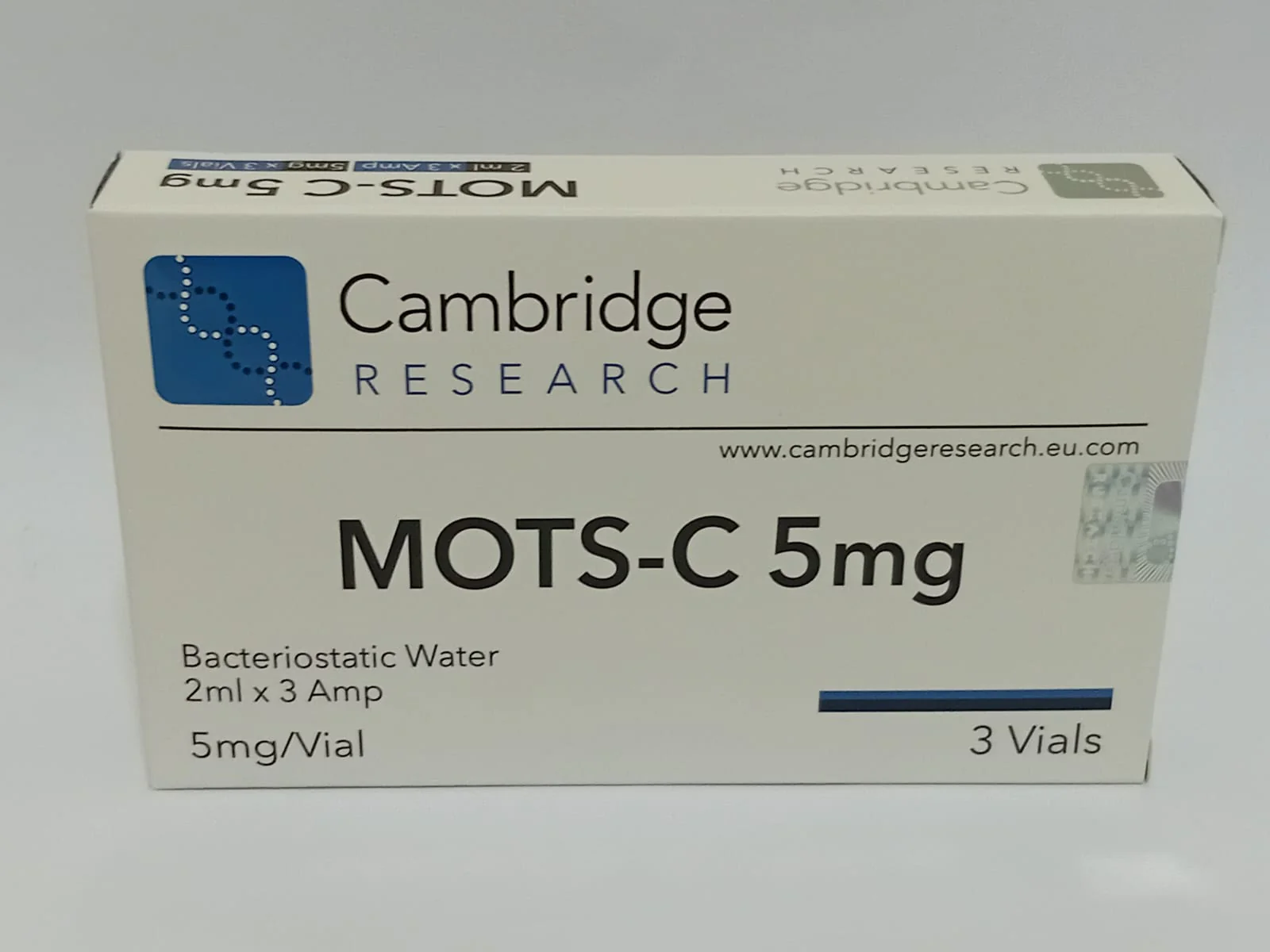
MOTS-C 5 MG
5 mg × 3 = 15
The peptide MOTS-c (mitochondrial open reading frame of the 12S rRNA-c) is a 16-amino acid mitochondrial-derived peptide that plays a significant role in metabolic homeostasis, particularly by regulating glucose metabolism in skeletal muscle. Research, including studies potentially connected to Cambridge, focuses on its therapeutic potential for various conditions.
Research and Functions of MOTS-c
Metabolic Regulation: MOTS-c enhances glucose utilization and glycolytic flux, primarily in skeletal muscle, by activating the AMPK (AMP-activated protein kinase) pathway. This action helps in managing insulin resistance, a key factor in type 2 diabetes and obesity.
Exercise Mimetic: Exercise naturally increases the levels of endogenous MOTS-c in human skeletal muscle and circulation. Due to its ability to improve physical performance and metabolic fitness in mice, it is considered a potential "exercise mimetic" for those with limited mobility.
Aging and Longevity: Studies suggest that MOTS-c levels decrease with age, and treatment with the peptide in aged mice has shown improvements in physical capacity and healthspan.
Product Information
Product Information
Shipping & Returns
Shipping & Returns
Description
5 mg × 3 = 15
The peptide MOTS-c (mitochondrial open reading frame of the 12S rRNA-c) is a 16-amino acid mitochondrial-derived peptide that plays a significant role in metabolic homeostasis, particularly by regulating glucose metabolism in skeletal muscle. Research, including studies potentially connected to Cambridge, focuses on its therapeutic potential for various conditions.
Research and Functions of MOTS-c
Metabolic Regulation: MOTS-c enhances glucose utilization and glycolytic flux, primarily in skeletal muscle, by activating the AMPK (AMP-activated protein kinase) pathway. This action helps in managing insulin resistance, a key factor in type 2 diabetes and obesity.
Exercise Mimetic: Exercise naturally increases the levels of endogenous MOTS-c in human skeletal muscle and circulation. Due to its ability to improve physical performance and metabolic fitness in mice, it is considered a potential "exercise mimetic" for those with limited mobility.
Aging and Longevity: Studies suggest that MOTS-c levels decrease with age, and treatment with the peptide in aged mice has shown improvements in physical capacity and healthspan.